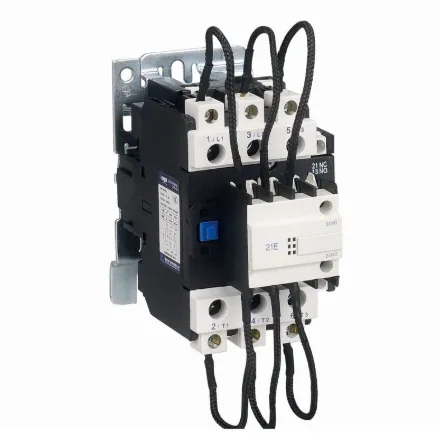
AC-6b Capacitor Duty Contactor
Inrush Current Protection: Integrated resistors/Reactors limit switching surges.
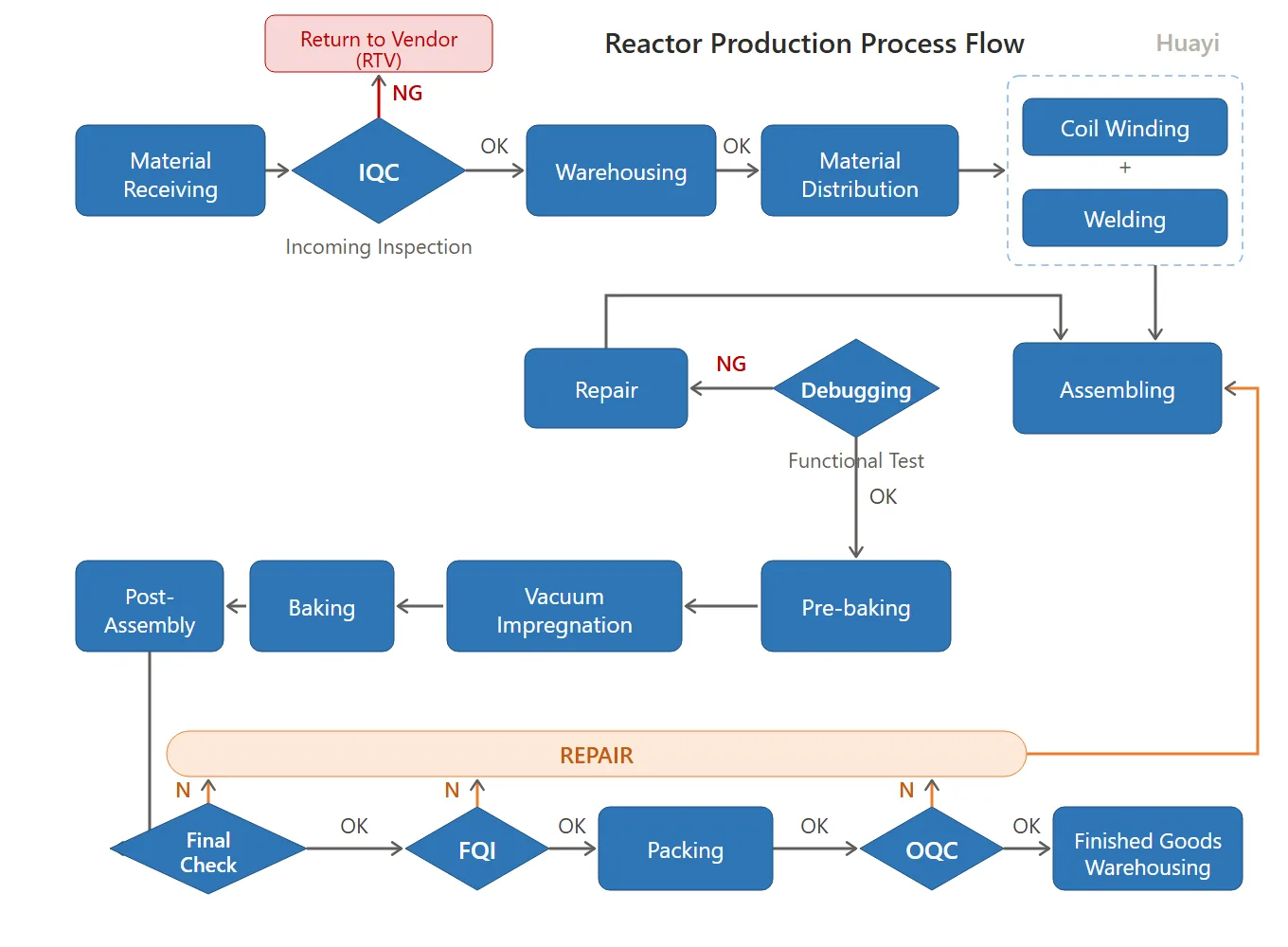
Dry-type iron-core reactors are critical electrical equipment in power systems, used for compensating capacitive reactive power, suppressing harmonic currents, and limiting short-circuit currents.
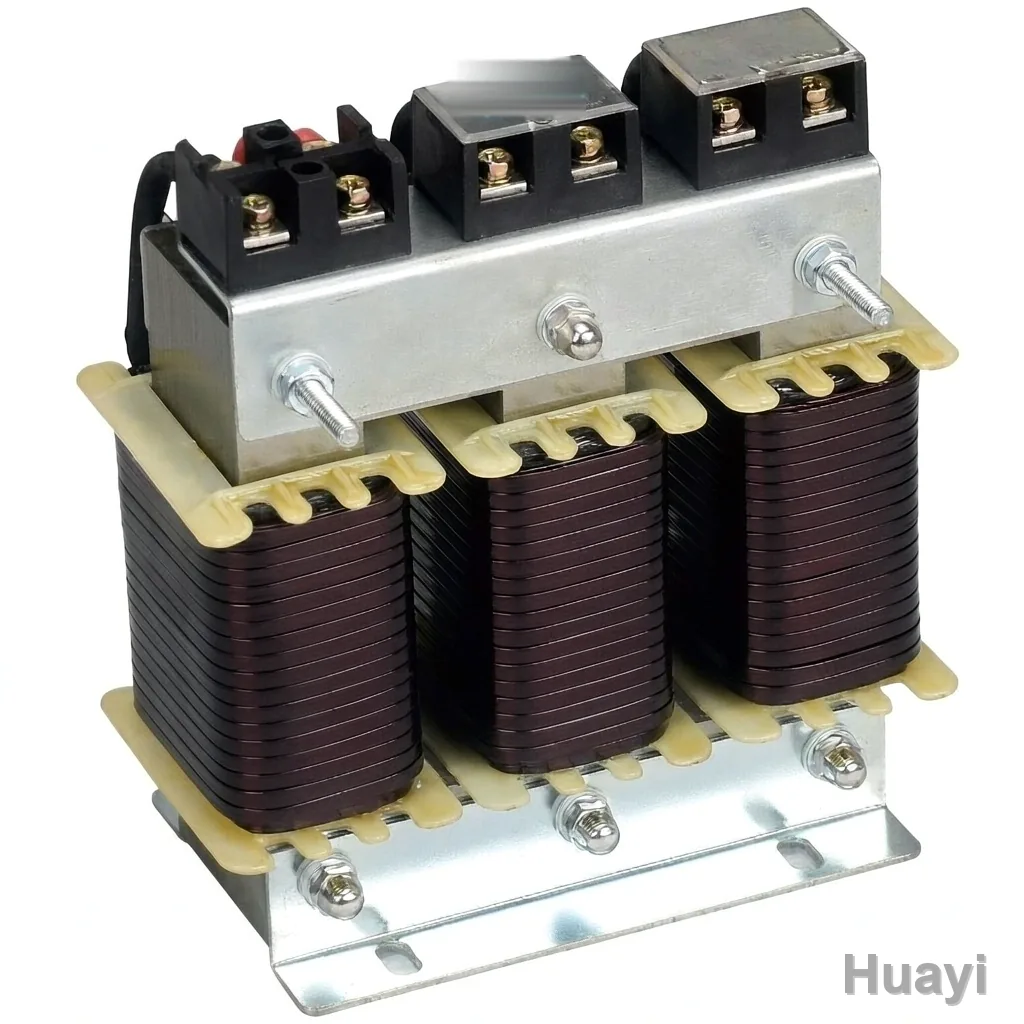
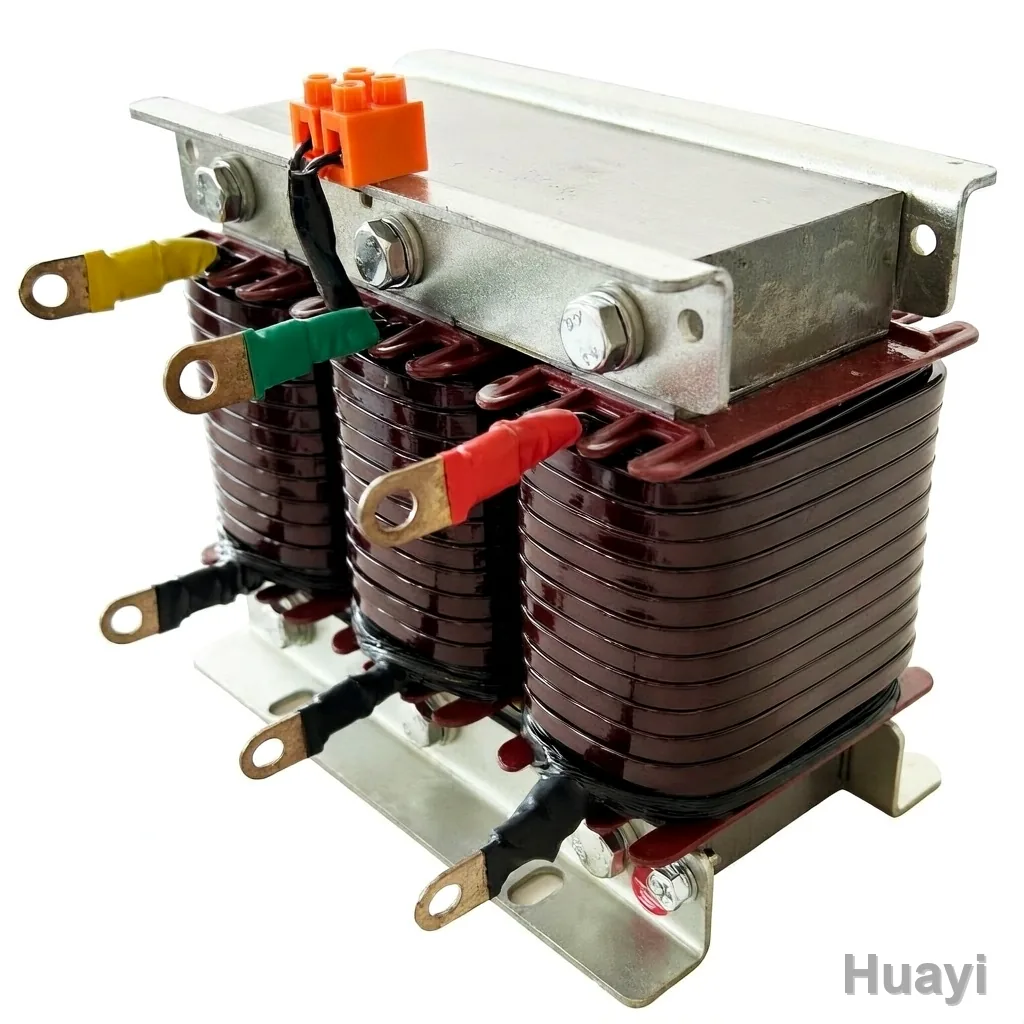
Model: HY-DR-60-7-400
Dry-type iron-core reactors are critical electrical equipment in power systems, used for compensating capacitive reactive power, suppressing harmonic currents, and limiting short-circuit currents.
| Rated system voltage | 450 / 480 / 525 V AC |
|---|---|
| Reactance | 7% / 14% |
| Noise level | ≤ 50 dB (A), at 1 m |
| Continuous overload capability | 1.35 × In at power frequency, continuous |
| Reactance linearity | ≥ 0.95 at 1.8 × In (7%) / 1.45 × In (14%) |
| Phase-to-phase reactance deviation | ≤ ±5% |
| Insulation thermal class | Class H (180 °C) |
| Temperature protection | 130–150 °C, normally closed (NC) |
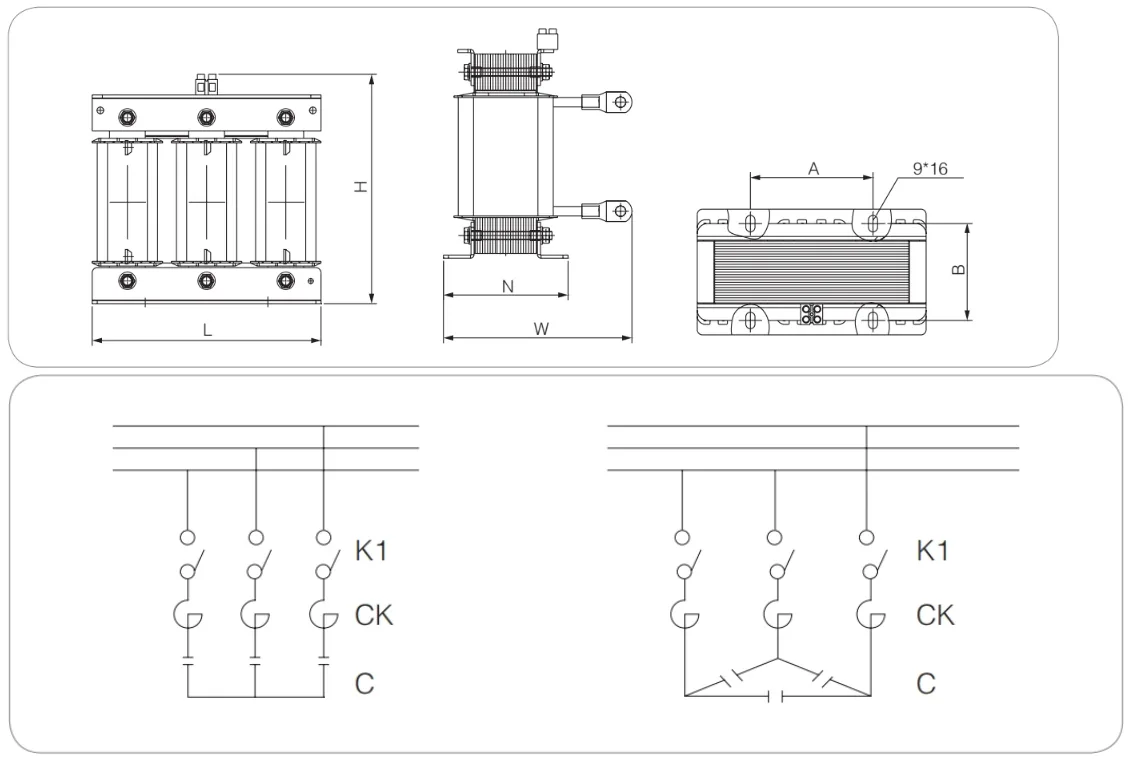
| Fault Phenomenon | Possible Causes | Solutions |
|---|---|---|
| Excessive Operating Noise (>70dB) | 1. Loose iron core (gap in silicon steel sheet joints has increased); 2. Winding vibration (loose clamping parts); 3. Excessive harmonic content | 1. Tighten the iron core clamping parts after power outage; 2. Check winding fastening bolts and add insulating spacers if necessary; 3. Test grid harmonics and add filtering capacitors |
| Excessive Temperature Rise (Exceeding Limit) | 1. Poor heat dissipation (fan failure, dust blockage); 2. Overload operation (current exceeds rated value); 3. Excessive iron/copper loss (damaged iron core or winding) | 1. Repair the fan and clean the heat dissipation channel; 2. Reduce load current and check if the grid is over-compensated; 3. Disassemble and inspect the iron core and winding, replace damaged parts |
| Decrease in Insulation Resistance | 1. High environmental humidity (moisture absorption in windings); 2. Insulation aging (long-term high-temperature operation); 3. Surface contamination (oil/dust conduction) | 1. Dry the windings (80°C vacuum drying); 2. Assess the degree of insulation aging and replace windings if severe; 3. Thoroughly clean the surface and apply insulating paint for protection |
Inrush Current Protection: Integrated resistors/Reactors limit switching surges.
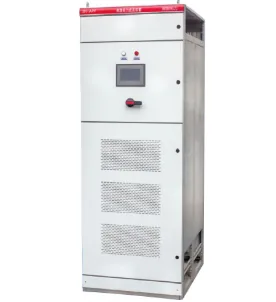
APF Active power filter device integrates one or multiple active power filter modules, a control unit, circuit breakers, contactors, a cooling system, and other core components into a standard industrial enclosure, forming a complete, plug-and-play harmonic mitigation solution.
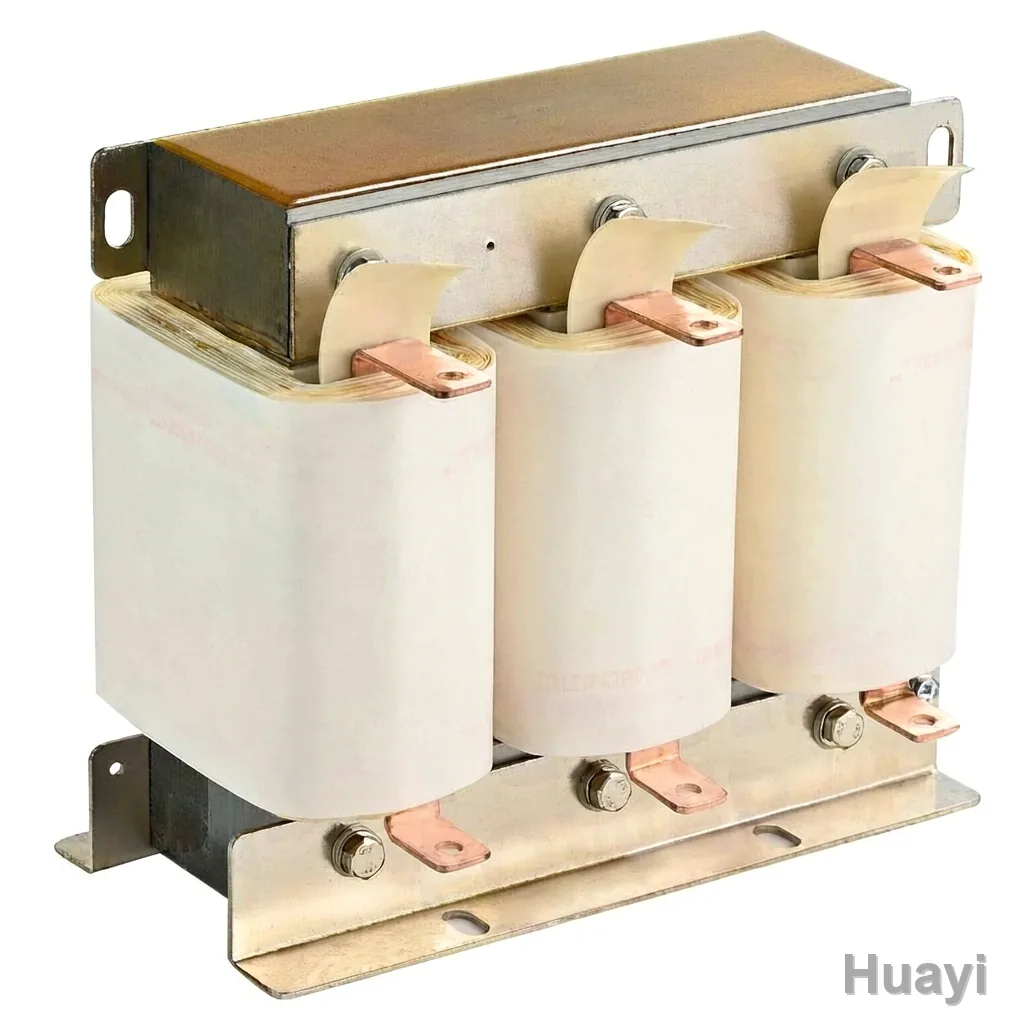
our Detuned Harmonic Filter Reactors are built using premium, low-loss silicon steel cores, high-grade winding insulation, and precision engineering techniques.