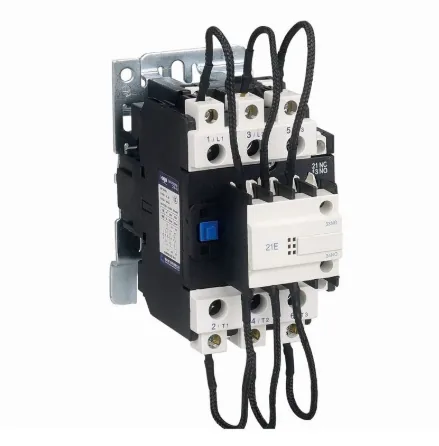
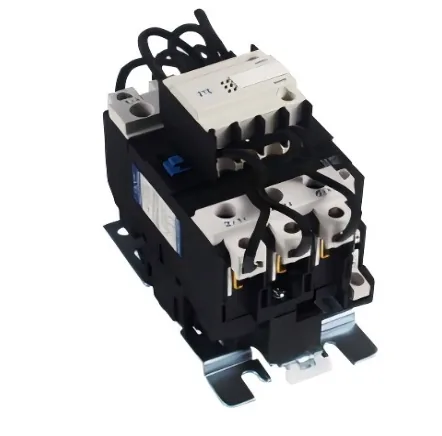
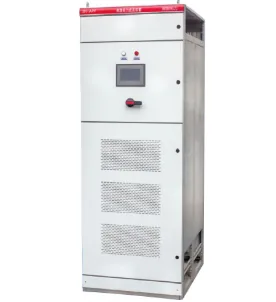
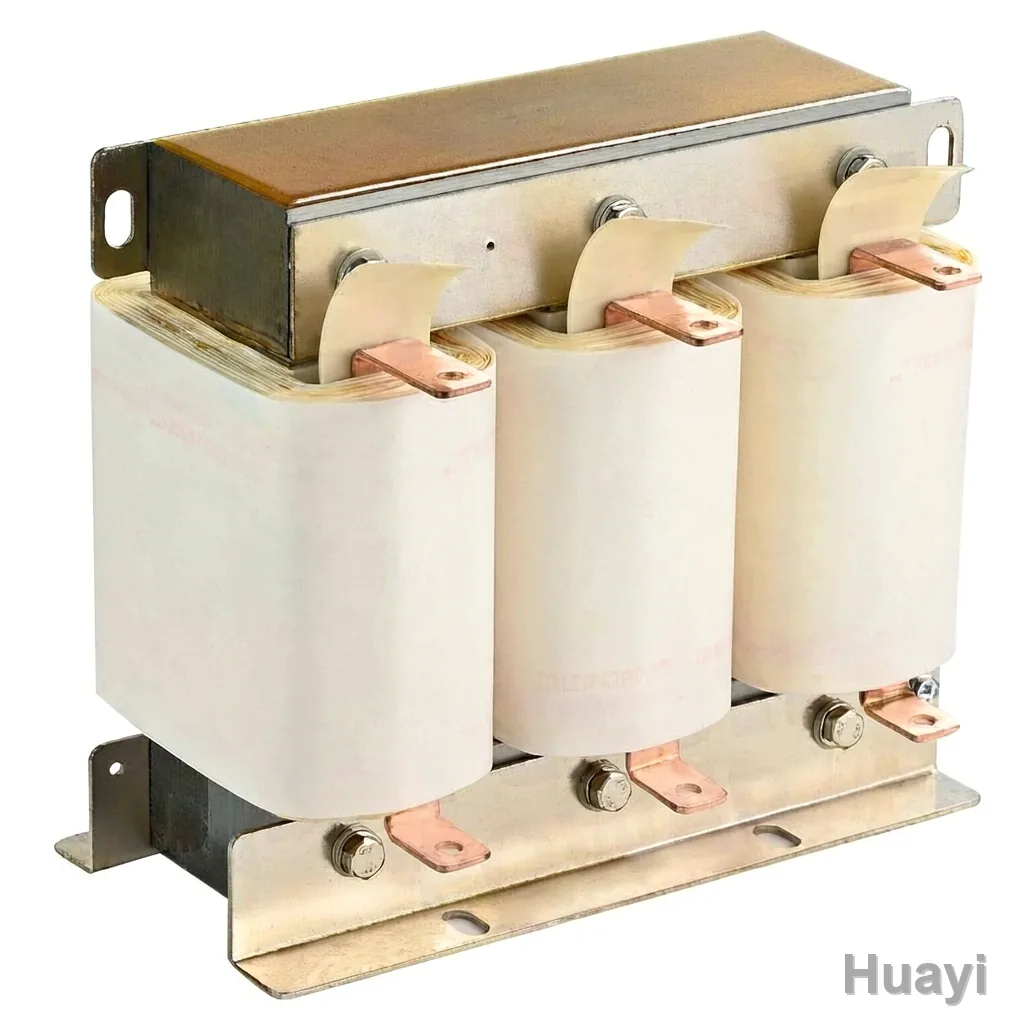
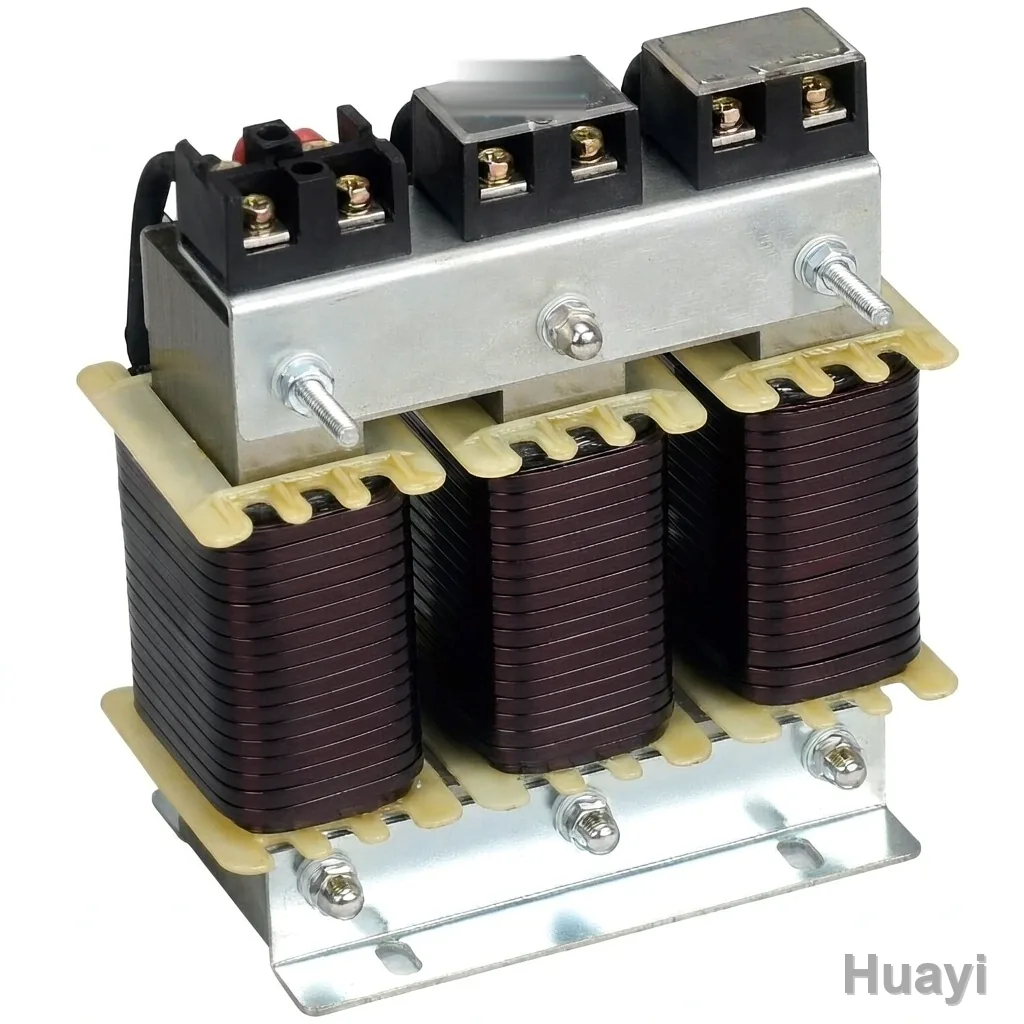
Standard contactors burn out fast when switching capacitors. Our AC-6b capacitor switching contactor is built specifically for reactive power compensation (RPC) systems. It handles massive inrush currents safely.
Core Functions:
- Switches APFC Panels: Designed for automatic power factor correction systems.
- Limits Inrush Current: Absorbs the power surge when capacitors turn on.
- Prevents Welding: Stops contact arcing and welding caused by high switching surges
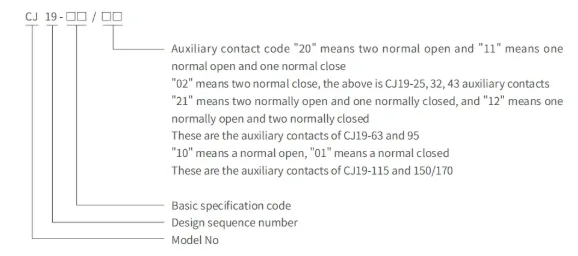
Technical Selection Guide
How Pre-Charge Technology Works
Capacitors create massive inrush currents when energized. Our AC-6b contactors prevent damage through a 3-step process:
- Pre-Charge Stage: Auxiliary contacts close first. Current flows through built-in resistors to limit the surge.
- Main Closure: After a short delay (~20–100ms), heavy-duty main contacts close, bypassing the resistors for full current flow.
- Safe De-energization: When turned off, bleeder resistors safely discharge the capacitor.
4 Steps to Select the Right Contactor
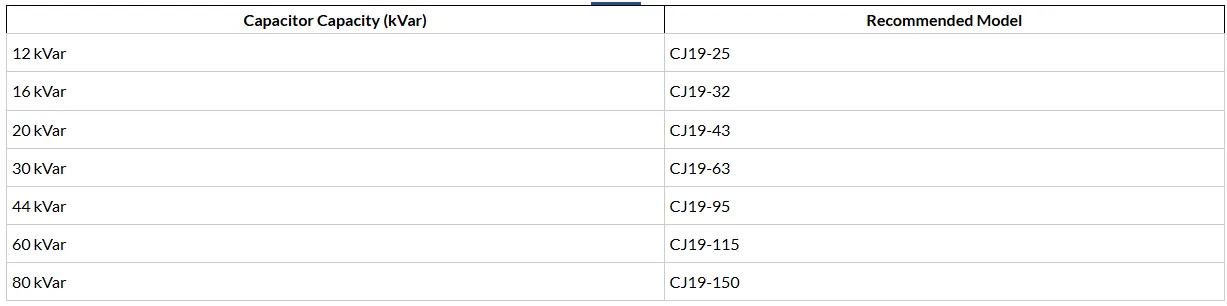
- Capacitor Rating: Match the contactor's kVar capacity to your bank (e.g., 25kVar, 50kVar).
- System Voltage: Ensure compatibility with your grid (230V, 400V, 480V, 525V, or 690V).
- Pole Configuration: Choose 3-Pole for Delta-connected capacitors, or 4-Pole for Star-connected with neutral.
- Coil Voltage: Match your control circuit (24V DC, 110V AC, 230V AC, etc.).
Which Type Fits Your Application?
| Type | Best For | Pros & Cons |
|---|
| Resistor-Equipped (CJ19) | Standard APFC panels | Cost-effective & reliable. Slight switching delay. |
| Hybrid (Thyristor-Assisted) | Dynamic compensation | Zero inrush & ultra-fast. Higher cost & complexity. |
| Standard Electromechanical | Low-cost PF correction | Cheaper upfront. Less durable for frequent switching. |
AC-6b vs. AC-3: Why Standard Contactors Fail
| Symptom | Probable Cause | Solution |
|---|
| Contact Welding | Excessive inrush current | Upgrade to the correct AC-6b rated model. |
| Contactor Chatter | Low control voltage | Check coil voltage (e.g., 24V/230V) and connections. |
| Overheating | Frequent switching / Poor cooling | Improve panel ventilation or reduce switching frequency. |
| Unusual Buzzing | Loose connections or coil issue | Tighten terminals and inspect the electromagnetic coil. |
| Premature Capacitor Failure | Wrong contactor rating | Verify kVar and voltage matching. |
Expert Note: Never use a standard AC-3 motor contactor for capacitor banks. The massive inrush current will weld the contacts and destroy your equipment within weeks.
Troubleshooting Common Issues
| Symptom | Probable Cause | Solution |
|---|
| Contact Welding | Excessive inrush current | Upgrade to the correct AC-6b rated model. |
| Contactor Chatter | Low control voltage | Check coil voltage (e.g., 24V/230V) and connections. |
| Overheating | Frequent switching / Poor cooling | Improve panel ventilation or reduce switching frequency. |
| Unusual Buzzing | Loose connections or coil issue | Tighten terminals and inspect the electromagnetic coil. |
| Premature Capacitor Failure | Wrong contactor rating | Verify kVar and voltage matching. |
Capacitor Selection Guide